


 RU
RU
Bitcoin is no longer an asset for early crypto enthusiasts only. According to Crypto.com, about 373 million people worldwide owned BTC in June 2026. In the first half of the year, the number of Bitcoin owners grew by another 2.5%. Around 800,000 transactions are processed on the Bitcoin blockchain every day.
That is why a bitcoin wallet is needed not just for storing crypto. A crypto wallet is the main tool for receiving BTC, sending it, and managing your funds.
In this guide, we will explain in detail how to create Bitcoin wallet and what it is. We will look at how BTC wallets work, what types exist, and how they differ.
What Is a Bitcoin Wallet and How Does It Work?
A bitcoin wallet is an app, program, or device for managing BTC. It does not store coins: the information about your funds is recorded on the blockchain. A wallet lets you receive and send BTC and track your balance. Some apps also offer built-in crypto exchange. Private keys are used to send BTC, since they sign transactions. In a non-custodial wallet, the user controls the keys, while in a custodial wallet, a third-party service does.
An address for receiving bitcoin is generated from the key. You can send it to another person or enter it when topping up your wallet. After a transfer, the information about the new funds appears on the blockchain, and the wallet tracks the changes and shows your available balance.
Sending BTC works the other way around. The user enters the recipient’s address and the amount, and the wallet creates a transaction. It is signed with the private key and sent to the network. After it is verified and included in the blockchain, the transfer receives confirmations.
To create a new wallet, a randomly generated set of data is usually used. In modern solutions, it is presented as a seed phrase, a sequence of 12 or 24 words. It can be used to restore access to the wallet. That is why a seed phrase must never be shared with other people or kept where strangers can see it.
What Types of Bitcoin Wallets Are There?
BTC wallets are divided into several types. First of all, they are split into hot and cold, as well as custodial and non-custodial.
A hot wallet stores keys on a device or server that is connected to the internet. Usually, it is an app on a smartphone or computer, or an online service. This option is convenient for everyday operations when you need to receive or send BTC quickly.
A cold wallet stores keys in an offline environment. In practice, the keys and the mnemonic phrase are kept on the user’s own device. Such wallets are more secure because they are dedicated hardware devices. This type of wallet is used for long-term crypto storage.
A non-custodial wallet gives control over the private key to the user. The service should not be able to dispose of the user’s BTC on its own. At the same time, the owner is responsible for keeping the seed phrase safe.
A custodial wallet works differently. The keys are controlled by a third-party service, and the user accesses their balance through an account or the platform’s interface. This option can be convenient, but the user depends on the service’s rules and infrastructure.
| Wallet type | Where the keys are | Connection | Key control | Main feature |
|---|---|---|---|---|
| Hot | On a PC, smartphone, or server | Online | Usually on the service’s side | Convenient for frequent operations |
| Cold | On a separate device or in an isolated environment | Minimal | On the user’s side | Suitable for long-term storage |
| Non-custodial | With the user | Can be online or offline | On the user’s side | The user keeps full control over BTC and fund management |
| Custodial | With a third-party service | Online | On the service’s side | Convenient access via an account |
These wallet types can be combined. For example, a mobile app can be hot and non-custodial, while a hardware wallet is cold and non-custodial.
That is why, when choosing, you should look not only at the name. It is important to know who controls the keys and how the wallet is protected.
How to Choose a Bitcoin Wallet: What to Look For
There is no universal solution that suits every user equally. Some need a simple tool for daily transfers, others care more about long-term BTC storage, and still others need a wallet that supports hundreds of coins with extra features. So if you are wondering how to get a Bitcoin wallet that fits your needs, consider the following:
- Ease of use;
- Security;
- How keys and phrases are stored;
- Additional features;
- Supported assets.
In practice, users rarely work with just one cryptocurrency. For example, USDT, TRX, and other tokens are often used together with BTC.
Among current solutions of this kind, TR.ENERGY Wallet stands out.
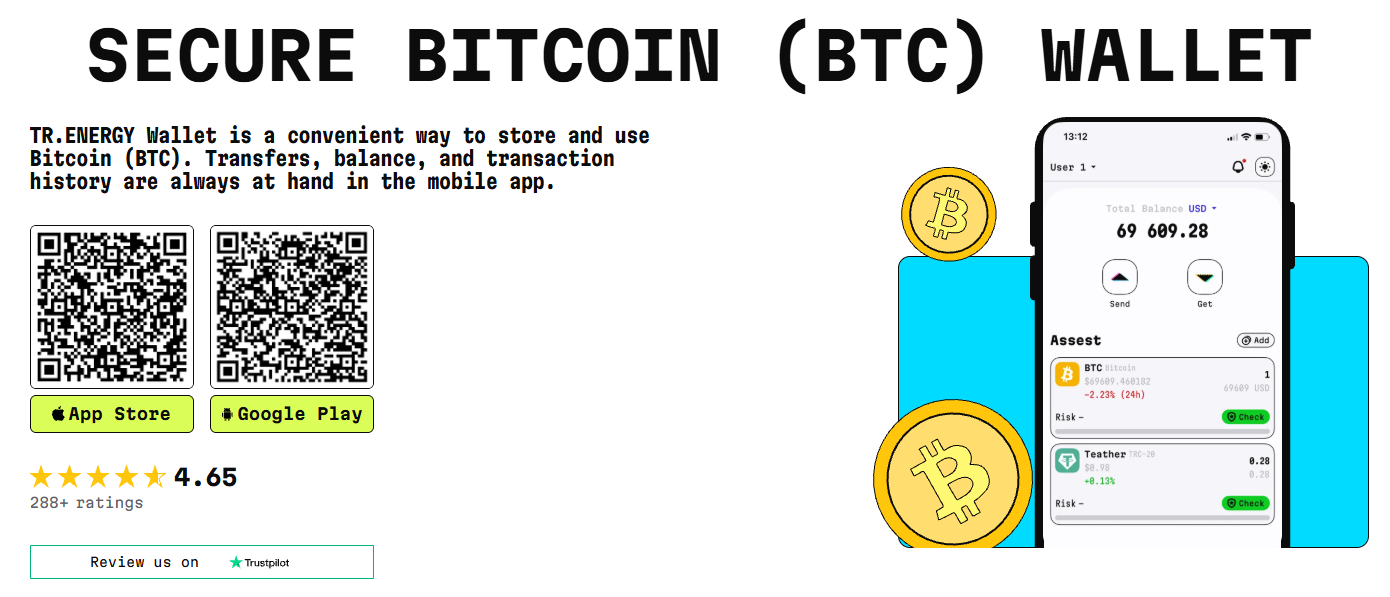
Although the wallet is built on the TRON blockchain, it also supports popular networks, including:
- Bitcoin;
- Ethereum;
- BNB Smart Chain;
- Solana;
- Base and others.
At the same time, TR.ENERGY Wallet solves another task: it helps you save on USDT transfers on the TRON network. It also lets you pay fees in USDT.
Another useful feature of the wallet is AML screening for BTC addresses. It allows you to assess an address’s history and possible risks in advance, before receiving or sending funds.
How to Create a Bitcoin Wallet: Step-by-Step Guide
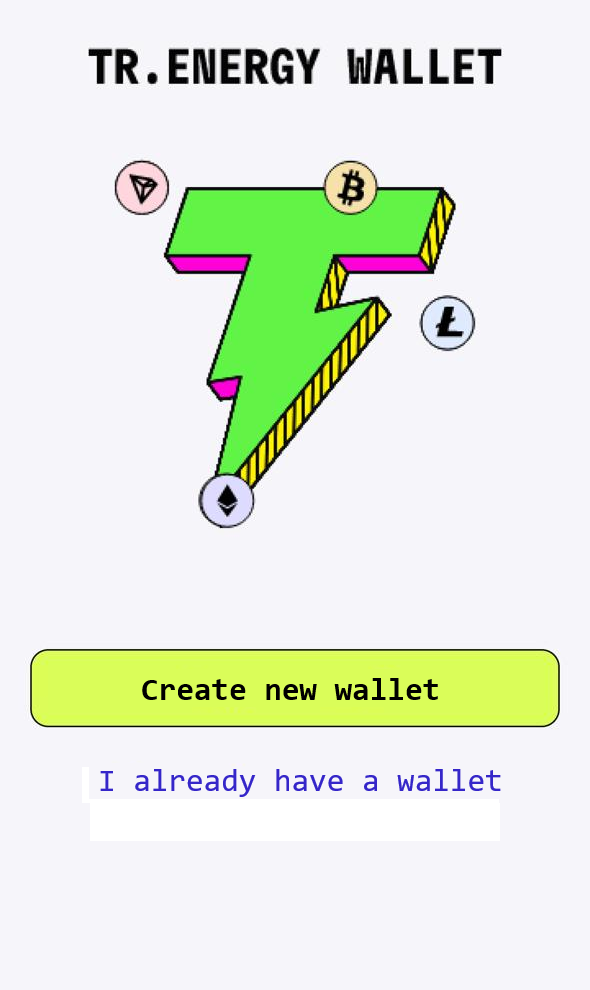
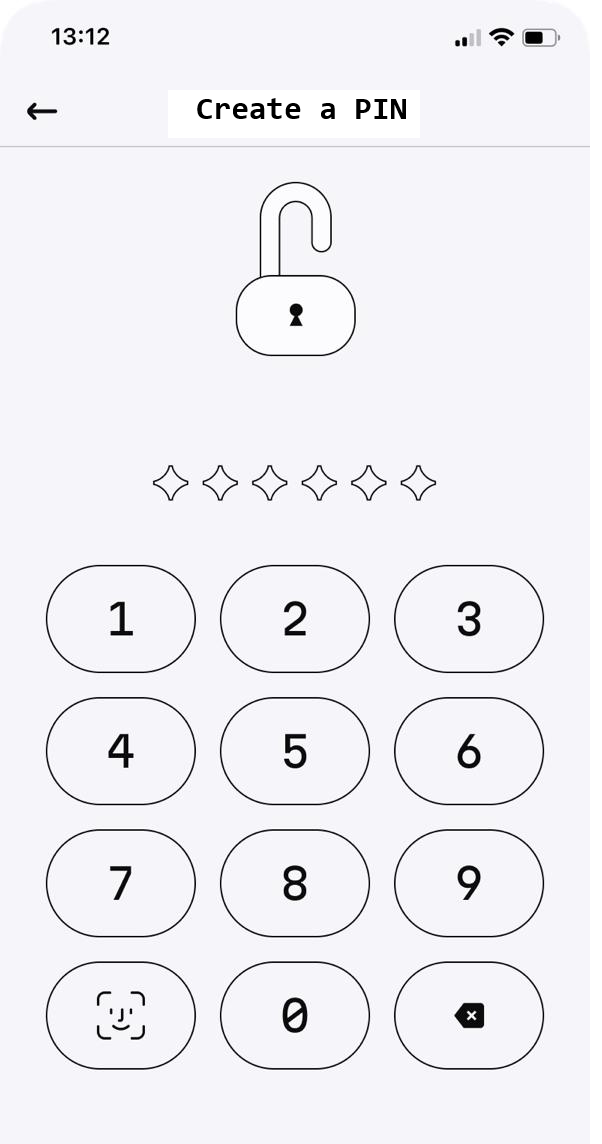
To create Bitcoin wallet for storing and managing BTC, you can use a popular solution, TR.ENERGY Wallet. The process takes just 2–3 minutes. Here is how to make a Bitcoin wallet in a few simple steps:
- Install the app and open it.
Choose to create a new wallet.
Create a PIN code.
Be sure to save your seed phrase. It is generated by the wallet itself.
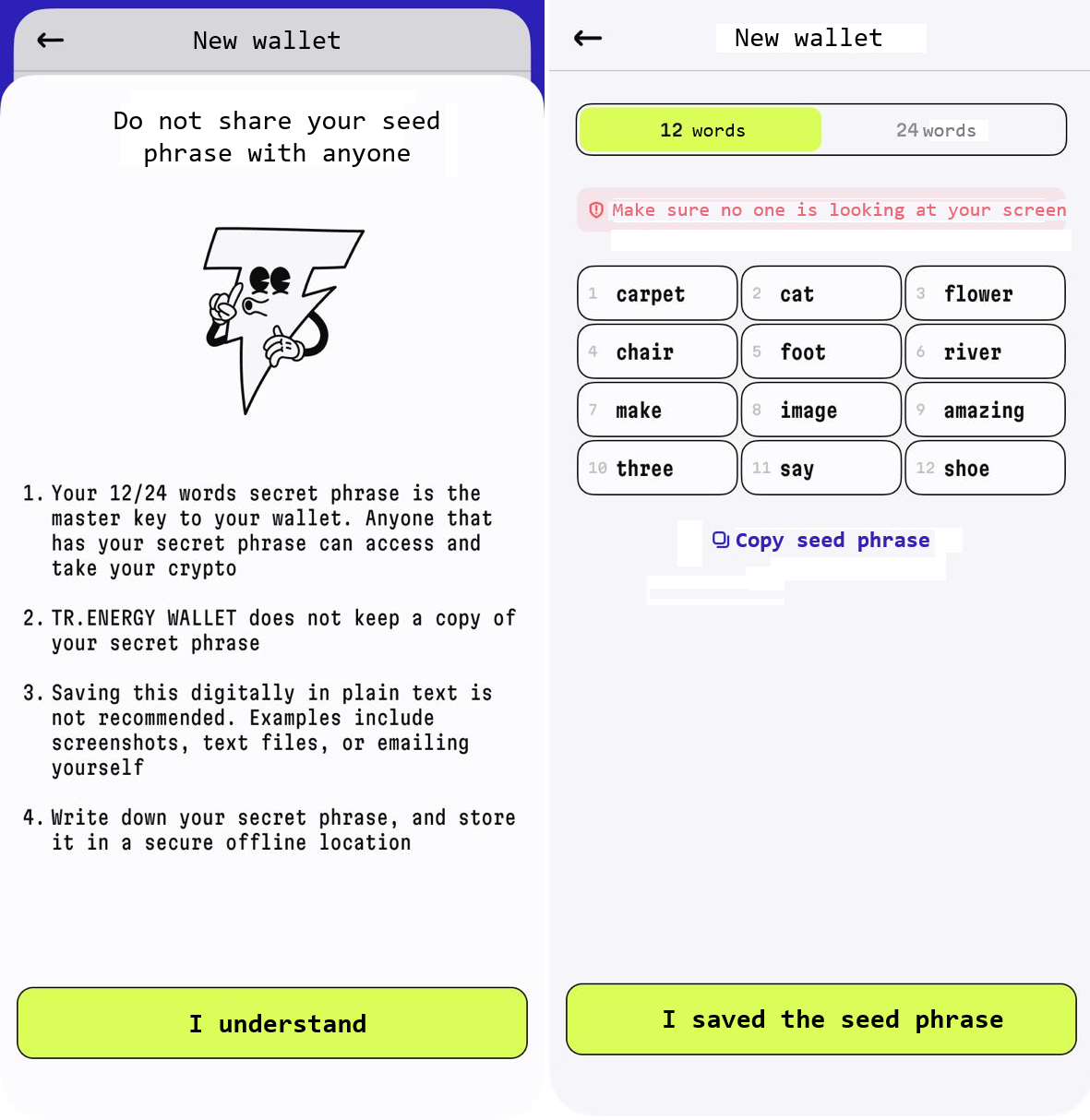
- Your BTC wallet is ready to use.
How to Find Your Wallet Address and How to Top Up, Send, and Receive Bitcoin
To find your address, open the BTC section in the installed TR.ENERGY Wallet and select “Receive.”
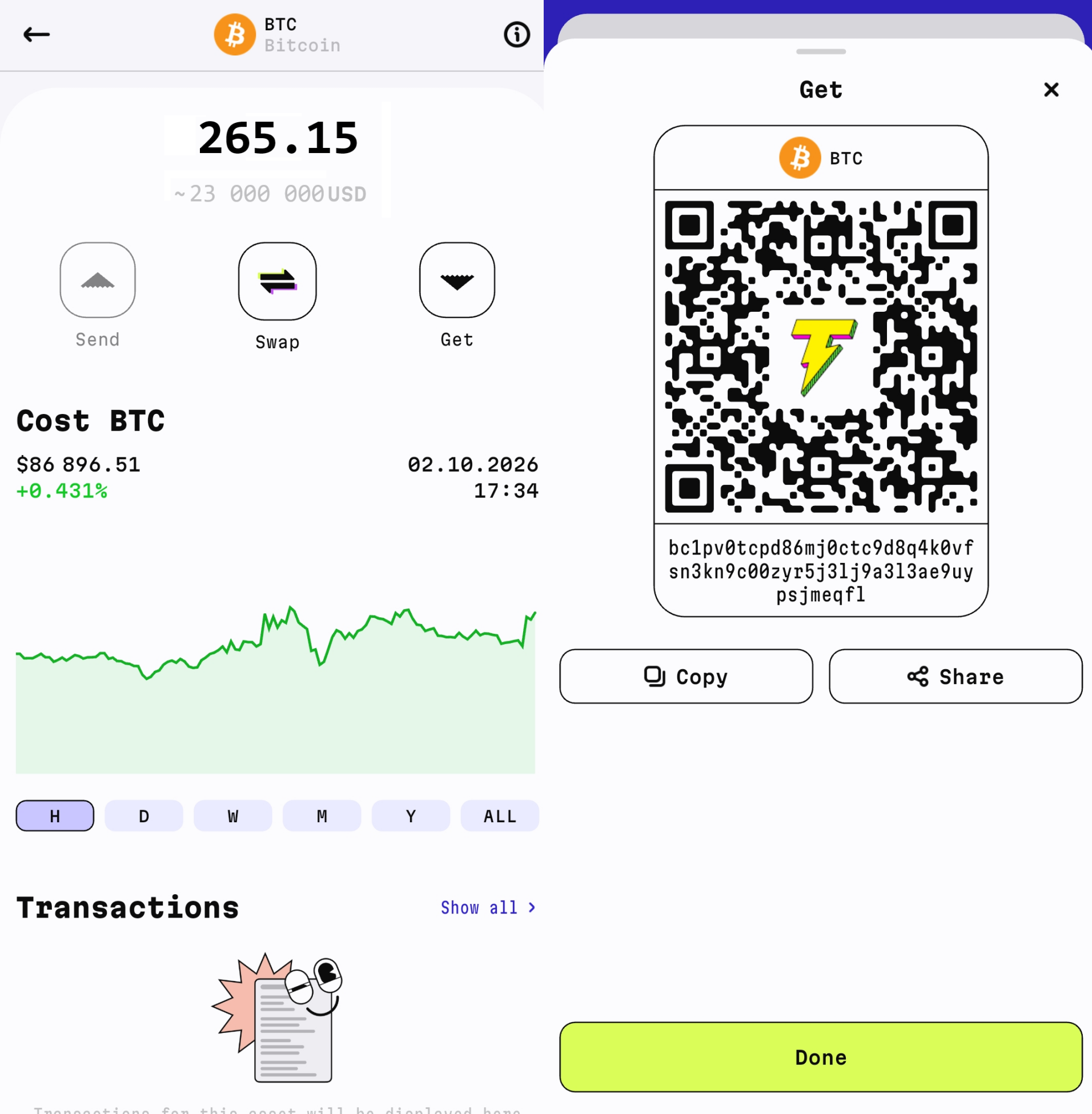
The app will show a deposit address. You can copy it and send it to another person, or enter it on an exchange when withdrawing funds.
To send bitcoin to another BTC address, tap “Send,” enter the recipient’s wallet address and the amount. Then confirm the transfer and wait for confirmations on the blockchain.
Before sending, it is important to check the network. For BTC, you must use the Bitcoin network specifically. If you send coins to an address on a different network, you will lose your funds.
How to Store Bitcoin Safely and Protect Your Wallet
Knowing how to setup a Bitcoin wallet is only half the job, because wallet security largely depends on how the user stores their access data. The seed phrase plays the main role here. It allows you to restore the wallet on another device.
A seed phrase must not be sent to other people. You should not keep it in chats, messenger notes, or cloud storage. For reliability, it is best to write it down on paper and put it in a place that nobody else can access. If you forget the seed phrase, it will be impossible to open the wallet.
Never share your wallet’s private keys with anyone. Service employees should not ask for this data for regular wallet use.
It is also worth carefully checking the address before every transfer. For large transfers, it is better to make an additional check. It takes little time but helps avoid mistakes.
If the wallet supports additional protection methods, you should use them too. Passwords, PIN codes, 2FA, and other security features do not replace the seed phrase. They help protect access to the app on your device.
Conclusion
Creating a BTC wallet is not difficult. It is much more important to set it up correctly and keep your recovery data safe. Before using a wallet, check who controls the keys. It is also worth understanding addresses, fees, and the rules for sending BTC. Pay special attention to the seed phrase. If you follow basic security rules, you can use your wallet for regular transfers and crypto storage without difficulty.
Specializing in the TRON ecosystem and in-depth analysis of TRX staking, energy rental, and USDT TRC‑20 fee optimization. I help users and businesses efficiently manage digital assets, delegate energy, and work with non-custodial wallets.